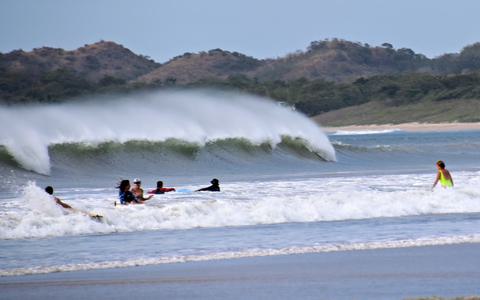
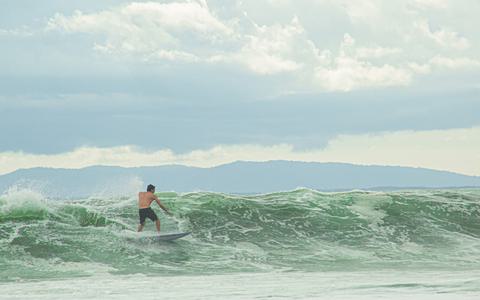
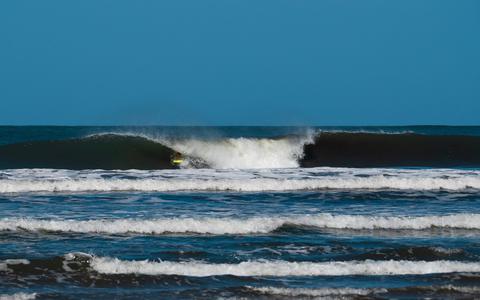
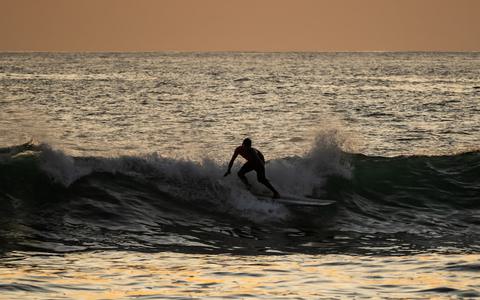
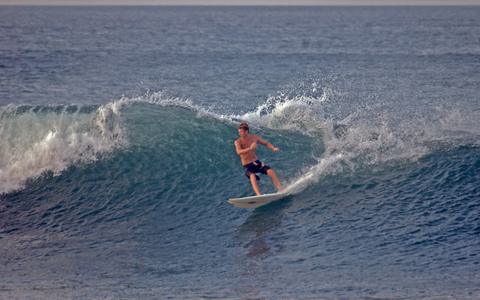
Powerful Baru-rivermouth-fed beach break; fast barrels mid-to-high, closes out at low.
The wave. Dominical is a beach break on Costa Rica's south Pacific coast, with fast, pitching lefts and barreling rights over sandbars. The best banks sit near the mouth of the Baru River. Guides rate it among the most consistent breaks in the country, with surf most days of the year.
When it works. South swell is the best match, and northeast wind blows offshore. Mid to high tide works best, and mid tide is faster and hollower. The wet season, about May to September, brings the biggest south and southwest swells.
Watch out for. The break is powerful, and strong rip currents run on big days. At dead low tide the waves close out into very shallow water. After rain the river can push cold, muddy water into the lineup. Lifeguards patrol the beach, which is rare in Costa Rica.
Who it suits. Mid-tide barrels suit advanced surfers, and the beach is not a place to learn. Beginners go to Dominicalito instead, a more protected beach just to the south.
Nearby. Dominicalito, just south, faces slightly northwest, so its waves are usually 3 or 4 feet smaller than Dominical's. Dominicalito Point, about 3 km south, is a left point that needs a big southwest or south-southwest swell and works at low to mid tide.
- The wave
- A hollow beach break.
- Best months
- All year
- Typical face
- 3–5 ft in season
- Surfable days
- 100% in season
- Water in season
- 29 C / 85 F, boardshorts
- Sweet spot
- 5 ft faces
- Tide
- Best on a mid-high tide
- Nearest airport
- SJO
- Getting there
- 192 km by road from SJO, about 3 hr 41 min.
Flying in with a board. Airlines we have seen into SJO: American Airlines, Copa Airlines, Avianca, United Airlines, Lufthansa, Southwest Airlines. Southwest takes no checked bag over 62 in at Nassau, Belize, Montego Bay or San Jose, Costa Rica (SJO) from Nov 15 to Jan 15. Checked Oct 2026.
Forecast and the trip from your airport
Long left point; S/SW wet-season swell.
The wave. Pavones is a left-hand point break over sand and rocks near the mouth of the Golfo Dulce. South swell slips between the tip of the Osa Peninsula and the mainland, hits a rocky point and peels left for 300 to 500 meters, and the best rides run past a kilometer. Kenny Easton is reported to have first surfed it in the early 1960s.
When it works. Large south to southwest groundswells are the best match, and east to northeast wind blows offshore. A rising tide is the favored window. The rainy season brings the most consistent and powerful swells.
Watch out for. Rocks sit in the lineup, and the wave changes when the river shifts the sand. The lineup gets very crowded when the forecast is good, so respect the locals. The town is small and remote, so check the forecast before you make the long drive.
Who it suits. Small south swells give intermediates long, easy walls, and goofy-footers face the wave on their toes. Big swells bring speed and length that reward experienced surfers.
Nearby. Zancudo, to the north in the Golfo Dulce, is a sheltered left point that works best around mid tide, and sources warn of jellyfish and sea lice there. Matapalo, across the gulf on the Osa Peninsula, is the next group of breaks.
- The wave
- A mellow point break.
- Best months
- Mar–May
- Typical face
- 4–6 ft in season
- Surfable days
- 99% in season
- Water in season
- 30 C / 86 F, boardshorts
- Sweet spot
- 7 ft faces
- Tide
- Best on a mid-incoming tide
- Nearest airport
- SJO
- Getting there
- 368 km by road from SJO, about 6 hr 34 min.
Flying in with a board. Airlines we have seen into SJO: American Airlines, Copa Airlines, Avianca, United Airlines, Lufthansa, Southwest Airlines. Southwest takes no checked bag over 62 in at Nassau, Belize, Montego Bay or San Jose, Costa Rica (SJO) from Nov 15 to Jan 15. Checked Oct 2026.
Forecast and the trip from your airport
Nosara's 4 km of A-frame sand peaks; Costa Rica's most consistent wave, open to S through W.
The wave. Playa Guiones is a long sand-bottom beach break in Nosara, with many shifting peaks that break left and right. Low tide brings heavier, hollow waves, and high tide brings fat, slow rollers. It takes swell from both the south and north Pacific, so it has rideable waves on most days of the year.
When it works. Southwest groundswell brings the most classic sets, and east to east-northeast wind blows offshore. Mornings are best before the onshore wind picks up, and evenings sometimes glass off. In the wet season it often goes overhead and messy for long stretches.
Watch out for. Most of the beach lies inside the Ostional Wildlife Refuge, which protects nesting olive ridley and leatherback turtles, so there are no buildings on the sand. Currents get strong on bigger swells, and sources also warn of sharks. Rain runoff makes the water dirty in the wet season.
Who it suits. Sets break far out and reform inside, so beginners and instructors sit in the whitewater on most days. Intermediates get open faces on shoulder-high days, and the lineup thins out once the swell grows.
Nearby. Playa Pelada, just north, is a reef break over coral and sand that only works sometimes, on swells of at least 4 feet. Ostional, farther north, has hollow, powerful waves at high tide and suits advanced surfers.
- The wave
- A punchy beach break.
- Best months
- All year
- Typical face
- 3–5 ft in season
- Surfable days
- 99% in season
- Water in season
- 30 C / 85 F, boardshorts
- Sweet spot
- 4 ft faces
- Tide
- Best on a mid-incoming tide
- Nearest airport
- LIR
- Getting there
- 94.5 km by road from LIR, about 2 hr 5 min.
Flying in with a board. Airlines we have seen into LIR: American Airlines, United Airlines, Air Canada, JetBlue, Alaska Airlines, Delta Air Lines.
Forecast and the trip from your airport
Punchy jungle-backed Nicoya beach break; hollowest on lower tides with morning NE offshore.
The wave. Santa Teresa is a beach break over sand and rock, with short, peaky lefts and rights along the town's main beach. Low tide brings fast, hollow tubes, and some sections turn reefy on bigger days. It has waves at any time of year.
When it works. West-northwest to southwest groundswell is the best match, and northeast wind blows offshore. Low to mid tide holds the best shape. The wet season, from May to August, brings reliable south and southwest swells, and the dry season is smaller and calmer.
Watch out for. Strong rips run along the beach, so watch where the current takes you even on small days. The bottom mixes rocks and sand, and some sections get shallow. Roads get rough in the wet months, so four-wheel drive helps.
Who it suits. Small days near 3 feet give beginners whitewater, and the inside reform gives them a place to go on bigger days. Intermediates and stronger surfers take on the bigger sets, and it is at its best from 5 to 8 feet.
Nearby. Punta Barigona, at Mal Pais to the south, needs a swell of 6 feet or more and has a long, hollow wave over outside reefs, with rocks and rips. Playa Hermosa, to the north, has a wide, flat beach where many surf schools teach on the gentle inside waves.
- The wave
- A punchy beach break.
- Best months
- All year
- Typical face
- 4–5 ft in season
- Surfable days
- 100% in season
- Water in season
- 30 C / 85 F, boardshorts
- Sweet spot
- 5 ft faces
- Tide
- Best on a mid-low tide
- Nearest airport
- SJO
- Getting there
- 155 km by road and ferry from SJO, about 5 hr 1 min.
Flying in with a board. Airlines we have seen into SJO: American Airlines, Copa Airlines, Avianca, United Airlines, Lufthansa, Southwest Airlines. Southwest takes no checked bag over 62 in at Nassau, Belize, Montego Bay or San Jose, Costa Rica (SJO) from Nov 15 to Jan 15. Checked Oct 2026.
Forecast and the trip from your airport
Forgiving W-facing bay peaks plus the Estero rivermouth bank; best on NW swell with dry-season E offshores.
The wave. Tamarindo is a bay of mellow beach break peaks that faces northwest, so south swells must wrap in and arrive gentler. At the north end, El Estero breaks over shifting sandbars at the river mouth, with lefts and rights and a fast, hollow right when the sand lines up. Rock reef peaks such as Pico Grande and Pico Pequeño sit in the bay and need more swell.
When it works. West to southwest swell is the best match, and east wind blows offshore. Mornings are best, before the afternoon onshore wind. Tamarindo is highly tide dependent, and El Estero likes a rising tide toward mid to high.
Watch out for. Crocodiles live in the Tamarindo estuary, and signs on the beach warn about them and about rip currents near the river mouth. Do not paddle or wade across the river mouth to Playa Grande. The bay is one of the most crowded lineups in Costa Rica.
Who it suits. The main beach suits beginners and longboarders on most days. El Estero and the reef peaks reward experienced surfers when the swell is up, and Pico Grande is for shortboards only.
Nearby. Playa Grande, across the estuary, has steep A-frames over sandbanks and rock reef that suit good intermediates, and leatherback turtles nest there inside Las Baulas National Marine Park. Langosta, to the south, has gentle rides of over 200 meters that suit beginners.
- The wave
- A mellow beach break.
- Best months
- All year
- Typical face
- 4–5 ft in season
- Surfable days
- 100% in season
- Water in season
- 30 C / 85 F, boardshorts
- Sweet spot
- 4 ft faces
- Tide
- Best on a mid-incoming tide
- Nearest airport
- LIR
- Getting there
- 63.5 km by road from LIR, about 1 hr 20 min.
Flying in with a board. Airlines we have seen into LIR: American Airlines, United Airlines, Air Canada, JetBlue, Alaska Airlines, Delta Air Lines.
Forecast and the trip from your airport