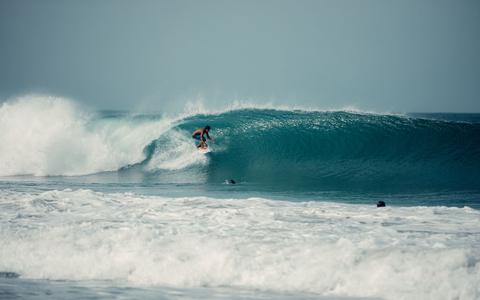
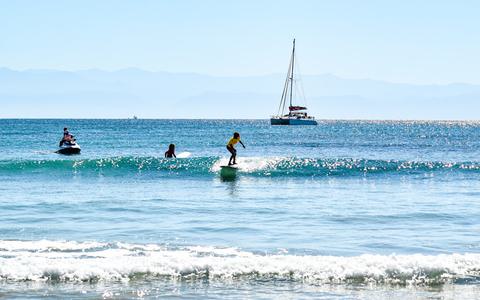
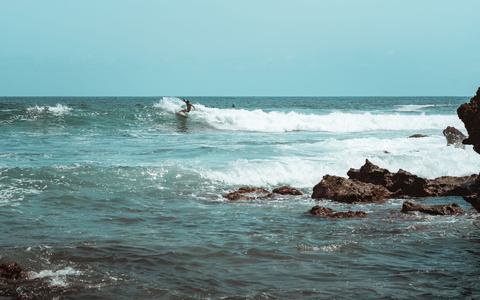
World-class sand-bottom right point; barrels down the headland on S groundswell.
The wave. Barra de la Cruz is a right-hand point near Huatulco on the Oaxaca coast, breaking over sand with scattered rock. It is a fast, hollow, dredging wave, with steep shoulders on mid-size days. It hosted the 2006 Rip Curl Search, when the webcast called it La Jolla, and the Championship Tour came back here in 2021.
When it works. South swell is the best match, and the southeast-facing headland lines it up. Northwest wind blows offshore. Spring and summer are the season, when south swells reach the Oaxaca coast most often.
Watch out for. The top of the point can be shallow, the paddle back up the point is long, and at size the wave can close out. Crowds are smaller than at Puerto Escondido, but the lineup gets busy when the swell is on. The village runs the beach, and the road in is a long dirt track.
Who it suits. It suits intermediate to advanced surfers on shortboards. Big days that border on closeout are for experienced surfers only. Beginners do better at La Bocana, which guides rate a beginner wave.
Nearby. La Bocana, about 10 km away at La Bocana de Copalita, is a sand-bottom beach break and rivermouth with lefts and rights that works best on south swell. Morro Ayuta Point, about 21 km away, is a right point over sand that guides say is very hard to find without local knowledge.
- The wave
- A hollow point break.
- Best months
- Mar–Nov
- Typical face
- 5–6 ft in season
- Surfable days
- 100% in season
- Water in season
- 30 C / 86 F, boardshorts
- Sweet spot
- 8 ft faces
- Tide
- Best on a mid-low tide
- Nearest airport
- HUX
- Getting there
- 42.4 km by road from HUX, about 38 min.
Flying in with a board. Airlines we have seen into HUX: American Airlines, Volaris, Aeroméxico, Viva Aerobus.
Forecast and the trip from your airport
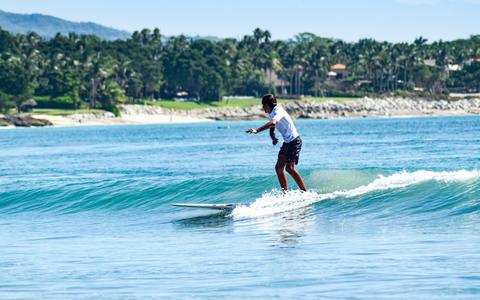
Endless mellow left point over cobble; the Pacific's longboard machine on summer SW.
The wave. La Saladita is a long left-hand point on the Guerrero coast, about 10 km north of Troncones, and one of the best known longboard waves in Mexico. A river-mouth sandbank forms a fishhook point, and waves peel over sand and rock. Normal rides run 150 to 300 m, and on the best days they run longer.
When it works. South to southwest swell is the best match, and north to northeast wind blows offshore. It works on all tides. Summer swells from the Southern Hemisphere bring the most size and punch, and winter waves are smaller and rarely overhead.
Watch out for. Watch for rocks and rips. Enter the water where the bottom is still sand. Weekdays are usually quiet, weekends bring many more surfers, and locals can be protective of the lineup.
Who it suits. Guides rate it good for all levels. Small winter days suit learners, and the slow wave favors longboards. Bigger summer swells give shortboarders a steeper face to work with.
Nearby. Troncones Point, at Manzanillo Bay, breaks over rocky reef and needs the strong southwest swells of summer, and guides rate it an advanced wave. Playa Linda, near Ixtapa, is a softer, slower left in front of a river mouth that suits beginners and intermediates.
- The wave
- A mellow point break.
- Best months
- Mar–Oct
- Typical face
- 4–6 ft in season
- Surfable days
- 100% in season
- Water in season
- 30 C / 86 F, boardshorts
- Sweet spot
- 6 ft faces
- Tide
- Works on any tide
- Nearest airport
- ZIH
- Getting there
- 52.2 km by road from ZIH, about 44 min.
Flying in with a board. Airlines we have seen into ZIH: American Airlines, United Airlines, Aeroméxico, Volaris.
Forecast and the trip from your airport
Exposed sand peaks below the Hacienda headland; winter NW lines up the right off the rocks.
The wave. Playa Los Cerritos is a wide bay on the Pacific side of Baja California Sur, with a beach break and a right point over sand. The point at the north end of the bay gives a long right that guides rate the best longboard wave in the region. The beach break has lefts and rights, and the left is often better.
When it works. Northwest groundswell is the best match, and east wind blows offshore. It works at all stages of the tide. Winter brings the most size and is the best season. The east wind usually holds until mid-morning, then the sea breeze adds chop.
Watch out for. Rocks sit near the point, and rip currents run along the beach. Big winter swells make the bay daunting, and the point can show 10 to 20 foot faces. The water gets busy when the surf is up, and surf schools work the inside.
Who it suits. The inside whitewater is for complete beginners. The point is a longboard wave. When the swell is big, few surfers paddle out.
Nearby. El Pescadero, about 5 km away, is all reef, with A-frame peaks that pick up most swell angles except straight south, and rocks and urchins make booties a must. La Pastora, north of Todos Santos, is an exposed reef with fast low-tide barrels for experienced surfers, plus a strong shore break and rips.
- The wave
- A punchy beach break.
- Best months
- Sep–Dec
- Typical face
- 4 ft in season
- Surfable days
- 98% in season
- Water in season
- 28 C / 82 F, boardshorts
- Sweet spot
- 4 ft faces
- Tide
- Works on any tide
- Nearest airport
- SJD
- Getting there
- 97.9 km by road from SJD, about 1 hr 16 min.
Flying in with a board. Airlines we have seen into SJD: Alaska Airlines, American Airlines, United Airlines, Aeroméxico, Volaris, Air Canada.
Forecast and the trip from your airport
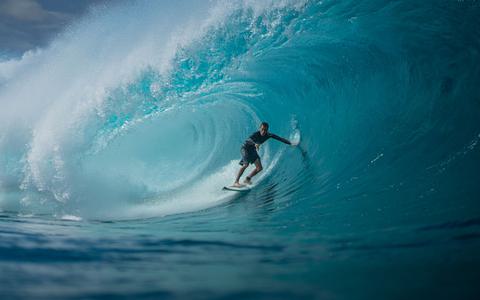
"Mexican Pipeline"; heavy S/SW beach barrel.
The wave. Zicatela is a heavy beach break over a shallow sandbar, with lefts and rights that break as thick, fast barrels close to shore. A deep offshore trench focuses south groundswells onto the bar, which earned it the name the Mexican Pipeline. The World Surf League has run its Puerto Escondido Challenge big wave event here.
When it works. South to south-southwest groundswell is the best match, and northeast wind blows offshore. The biggest swells come from South Pacific storms during the local summer. The seafloor has trenches and channels that shift over time, so the banks change.
Watch out for. The shore break has almost no run-out, the paddle out is punishing, and strong rips run along the beach. Red flags fly on most days.
Who it suits. Zicatela is for advanced and expert surfers and bodyboarders only, and experienced bodyboarders often own the lineup. Intermediates and beginners do better at La Punta and Carrizalillo.
Nearby. La Punta, at the south end of Zicatela, is a mellower sand-bottom break where a rocky point and reef filter the swell, and it suits intermediates. Carrizalillo is a sheltered cove where waves rarely pass chest height, reached by a staircase of about 170 steps.
- The wave
- A hollow beach break.
- Best months
- Apr–Oct
- Typical face
- 6–7 ft in season
- Surfable days
- 99% in season
- Water in season
- 30 C / 87 F, boardshorts
- Sweet spot
- 11 ft faces
- Tide
- Best on a mid tide
- Nearest airport
- PXM
- Getting there
- 6.7 km by road from PXM, about 11 min.
Flying in with a board. Airlines we have seen into PXM: United Airlines, Air Canada, Viva Aerobus, Aeroméxico, American Airlines, Volaris.
Forecast and the trip from your airport
Mellow rivermouth right in a NW-facing bay; longboard-friendly, peaks on winter NW swell.
The wave. The main wave is a right that breaks at the river mouth over a sand bottom studded with rocks and a few reef patches. It is usually tummy to chest high, so longboards are common. A faster left breaks on bigger swells, and surf schools teach on the sandy beach break in front of the fishing boats.
When it works. The bay faces slightly north, so it depends on north to northwest swells in winter. Mid tide is generally best, and very high or very low tides can flatten it or close it out. Early mornings are usually cleanest, and it tends to close out when the swell passes 6 feet.
Watch out for. Rocks and sea urchins sit under the point, so reef shoes help, especially at low tide. Currents and rips get strong on big swell days, and the lineup is busy. After heavy rain, when the river mouth opens to the sea, stay out of the water for 48 to 72 hours.
Who it suits. Beginners belong at the beach break in front of the boats, ideally with an instructor. Intermediates surf the right on moderate days, and bigger north swells on the right and left suit advanced surfers.
Nearby. San Pancho, just north, is a quick, challenging beach break with several peaks that closes out often and does not suit learners. La Lancha at Punta de Mita, about 20 to 30 minutes away, is a wedgy A-frame that is mostly left, and the Punta de Mita breaks often work when Sayulita is flat.
- The wave
- A mellow rivermouth break.
- Best months
- Jan–Feb
- Typical face
- 3 ft in season
- Surfable days
- 100% in season
- Water in season
- 25 C / 77 F, boardshorts
- Sweet spot
- 4 ft faces
- Tide
- Best on a mid tide
- Nearest airport
- PVR
- Getting there
- 53.4 km by road from PVR, about 43 min.
Flying in with a board. Airlines we have seen into PVR: American Airlines, Volaris, Aeroméxico, Southwest Airlines, Air Canada, Alaska Airlines.
Forecast and the trip from your airport
Long right points; summer S swell.
The wave. Scorpion Bay is a run of right-hand points that face south beside San Juanico, a fishing village on the Pacific coast of Baja California Sur. The points are numbered out from town, and the outer ones get bigger waves. On big south swells the points can link into one very long ride. Surfer Magazine once ranked it the 36th best wave in the world.
When it works. South to south-southwest groundswell is the best match, and west-northwest wind blows offshore. The points sit in the lee of the prevailing northwest wind. Summer brings the strongest and most consistent south swells, and the surf is inconsistent outside that season.
Watch out for. At low tide, jagged volcanic rock lines the shore at Third Point, and most people wear booties. Stingrays sometimes sit on the sandy bottom at Second Point. On big days the current is strong at the outer points. The roads in are rough, and the north road needs four-wheel drive.
Who it suits. First and Second Point are mellow and suit learners on small swells. The outside points barrel, and bigger days there are for experienced surfers.
Nearby. First Point, closest to Ponga Beach, has a gently sloping sand bottom and a table rock that goes under water at high tide, and it is rideable at 1 foot. Fourth Point picks up more westerly swell, but afternoon wind often blows side-shore there.
- The wave
- A mellow point break.
- Best months
- Apr–Jul
- Typical face
- 3–4 ft in season
- Surfable days
- 91% in season
- Water in season
- 17 C / 62 F, 4/3
- Sweet spot
- 9 ft faces
- Tide
- Best on a mid tide
- Nearest airport
- LTO
- Getting there
- 175 km by road from LTO, about 3 hr 9 min.
Flying in with a board. Airlines we have seen into LTO: American Airlines, Alaska Airlines, Volaris.
Forecast and the trip from your airport