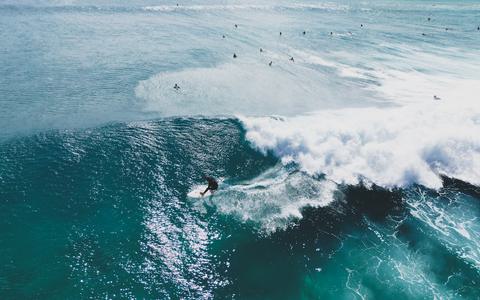
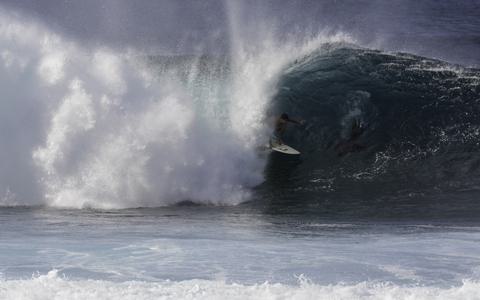
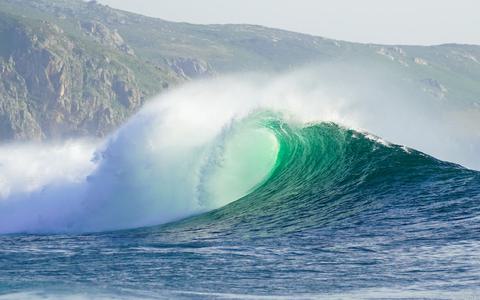
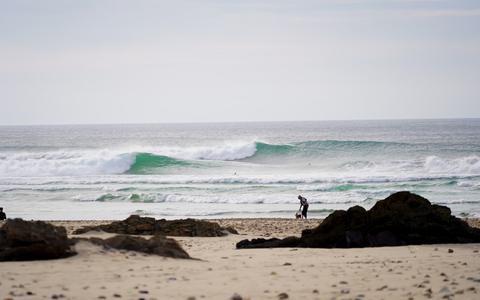
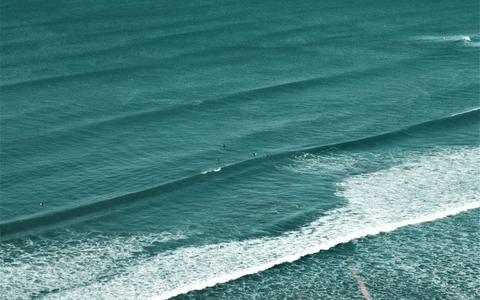
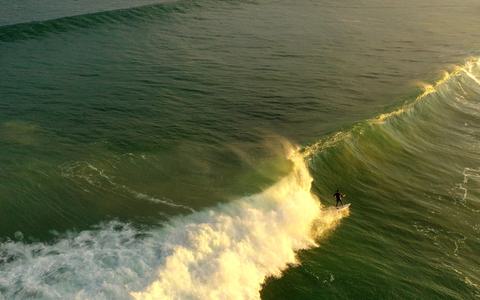
Piedra Playa's punchy sand peaks under El Cotillo's cliffs; winter NW groundswell in warm water.
The wave. Piedra Playa is the long beach under the cliffs just south of El Cotillo, on Fuerteventura's northwest coast. Shifting peaks break left and right over sand. The south end has a small patchwork of rock reef and picks up 1 to 2 feet more swell than the north end. On a good day it barrels, but it often closes out.
When it works. West to northwest groundswell is the best match, and east wind blows offshore. Tide matters little here. Winter is the season, and summer is often flat or small.
Watch out for. Winter waves break hard and fast, and many sets close out with board-breaking power. Currents are strong, so take care when you paddle out on powerful days. The south end has patches of rock among the sand, and the wind often blows hard on this coast.
Who it suits. Big winter swells are for experts, and moderate days suit intermediates. In summer the north end, called Playa del Castillo, turns small and soft, and surf schools bring beginners there for the whitewater.
Nearby. The Spew Pits, a reef about 100 m outside the harbour mouth, need a big northwest swell and are for experts only, with shallow reef and big rips. Esquinzo, a beach break about 20 minutes south by dirt road, has punchy peaks, mostly lefts, and strong rips that suit experienced surfers.
- The wave
- A punchy beach break.
- Best months
- Oct–Feb
- Typical face
- 4–6 ft in season
- Surfable days
- 72% in season
- Water in season
- 21 C / 69 F, spring suit
- Sweet spot
- 4 ft faces
- Tide
- Works on any tide
- Nearest airport
- FUE
- Getting there
- 45.3 km by road from FUE, about 45 min.
Flying in with a board. Airlines we have seen into FUE: Ryanair, easyJet, Iberia, Vueling, TAP Air Portugal, Volotea.
Forecast and the trip from your airport
Five km of peaks beneath the Famara cliffs; Lanzarote's wave garden from learner to pro.
The wave. Playa de Famara runs under the Risco de Famara cliffs, with left and right peaks over sand and rock. Locals split it into sectors, from El Codito by the village to Papelillo at the north end. Bigger days bring closeouts, so wave choice matters.
When it works. North to northwest swell is the best match, and southeast to south wind blows offshore. Mid to high tide is the most consistent window. Wind often turns it messy, and the far north end belongs to kitesurfers.
Watch out for. Rips run along the beach all year, so check with a lifeguard or surf school before you paddle out. El Codito and the Muelle de Famara break over rock, and the Muelle is shallow and sharp. Surf schools fill the inside at El Molino on most days.
Who it suits. El Molino's soft whitewater over sand makes it a classic first-lesson spot. Intermediates find walls at El Palo. Experts take on El Codito and the Muelle when big north-northwest swells arrive.
Nearby. San Juan, a short drive west of the village, is a fast left over volcanic reef that wants low tide. El Quemao at La Santa is a shallow lava-reef left for experts only, and its locals guard it hard.
- The wave
- A mellow beach break.
- Best months
- Dec–Jan
- Typical face
- 6 ft in season
- Surfable days
- 68% in season
- Water in season
- 21 C / 69 F, spring suit
- Sweet spot
- 4 ft faces
- Tide
- Best on a mid-high tide
- Nearest airport
- ACE
- Getting there
- 25.3 km by road from ACE, about 40 min.
Flying in with a board. Airlines we have seen into ACE: Ryanair, Vueling, easyJet, Iberia, Aer Lingus, Transavia (France & Netherlands).
Forecast and the trip from your airport
World-class left rivermouth; autumn/winter.
The wave. Mundaka is a left that peels off a triangular sandbar at the mouth of the Urdaibai estuary, inside a UNESCO biosphere reserve. Rides run 150 to 300 meters, and it was once a stop on the World Championship Tour. Dredging in the estuary changed the bar and the wave nearly vanished, but the bar has since recovered its original shape.
When it works. A strong northwest swell has to wrap into the bay and hit the bar at the right angle, and south to southwest wind blows offshore. At high tide the wave often backs off or disappears.
Watch out for. The rip in the river mouth is strong, so do not drift far past the lineup. The takeoff is small and crowded when it breaks, and locals guard it closely. The water is cold, so bring a good wetsuit.
Who it suits. It is for intermediate to expert surfers who can handle a fast, hollow left and a strong current. Beginners should stay on the beaches nearby.
Nearby. Laida, across the estuary mouth, is a sand-bottom beach that works on all tides. Laga is a sand-bottom beach close by that works best at low and medium tide.
- The wave
- A hollow rivermouth break.
- Best months
- Oct–Mar
- Typical face
- 6–8 ft in season
- Surfable days
- 93% in season
- Water in season
- 14 C / 57 F, 4/3 + boots
- Sweet spot
- 7 ft faces
- Tide
- Best on a low-incoming tide
- Nearest airport
- BIO
- Getting there
- 32.7 km by road from BIO, about 41 min.
Flying in with a board. Airlines we have seen into BIO: Vueling, Lufthansa, United Airlines, TAP Air Portugal, Iberia, Air France.
Forecast and the trip from your airport
Cantabria's most consistent beach break, across the bay from Santander; mellow lefts and rights, works year-round.
The wave. Somo is a long, dune-backed beach break that faces Santander across the bay, and its east end joins Loredo. Many shifting peaks break left and right over sand. Outer banks give faster, punchier waves when the swell is head high, and headlands near Santander block some direct northwest swell.
When it works. Northwest to north-northwest swell is the best match, and south to southeast wind blows offshore. The banks work on all tides, and a rising tide is often better. Autumn is the prime season, but the beach works all year.
Watch out for. Strong rips form as the swell grows, and the paddle out gets long. Water quality often drops after rain because of the nearby river mouth. Peaks in front of the surf schools are packed, so walk along the beach for more space.
Who it suits. Small swells suit beginners and longboarders, and guides rate it good for all levels. Bigger days suit confident shortboarders, and big winter swells are for advanced surfers.
Nearby. Loredo, at the east end of the same beach, can be cleaner and less crowded in east wind, and its sets run a little bigger. Playa de Langre, a short drive east, sits below high cliffs that block northwest swell and wind, and it is a popular bay for learning.
- The wave
- A mellow beach break.
- Best months
- All year
- Typical face
- 3–4 ft in season
- Surfable days
- 94% in season
- Water in season
- 21 C / 70 F, spring suit
- Sweet spot
- 4 ft faces
- Tide
- Best on a mid tide
- Nearest airport
- SDR
- Getting there
- 20.8 km by road from SDR, about 27 min.
Flying in with a board. Airlines we have seen into SDR: Iberia, Vueling, Ryanair.
Forecast and the trip from your airport
Bilbao's home beach break; W-N swell with NW best, S/SSE offshore, hollow off the low tide.
The wave. Arrietara is Sopelana's main surf beach, and it shares one stretch of sand with Atxabiribil. The beach faces northwest and picks up a lot of swell, with lefts and rights over sand and rock. El Pasillo is a long left with very vertical sections. The beach has hosted bodyboard world tour and ASP events.
When it works. Northwest to north-northwest swell is the best match, and south to southeast wind blows offshore. Each peak has its own tide, and Sope Atrás, a long left, works only at low tide. Spring and autumn are best, and summer is often flat.
Watch out for. Rips and rocks are the main hazards. When the surf is up, the water gets busy, and the crowds can make surfing hazardous. The bigger winter swells are too hard for total beginners.
Who it suits. Summer days suit learners, and many surf schools work from Arrietara. Intermediates practice takeoffs between Peñón Txiki and the southwest cliffs. In autumn and winter the banks hold big swells for experienced surfers.
Nearby. La Triangular, a reef at the west end of Arrietara, is mostly a right with a steep, fast takeoff, and its short lefts roll into jagged rocks. Meñakoz, about 1 km away, is an XXL reef that works only three or four times a winter, and it is for pros only.
- The wave
- A punchy beach break.
- Best months
- All year
- Typical face
- 3–4 ft in season
- Surfable days
- 93% in season
- Water in season
- 20 C / 68 F, spring suit
- Sweet spot
- 4 ft faces
- Tide
- Best on a mid-low tide
- Nearest airport
- BIO
- Getting there
- 18.9 km by road from BIO, about 27 min.
Flying in with a board. Airlines we have seen into BIO: Vueling, Lufthansa, United Airlines, TAP Air Portugal, Iberia, Air France.
Forecast and the trip from your airport
Basque beach-break peaks along the seawall; Spain's surf-town classic and longtime contest venue.
The wave. Zarautz is an exposed beach break in front of the town, with many left and right peaks over sand. Its 2.5 km beach is the longest in the Basque Country. The east end breaks in peaks with hollow exits, and the more sheltered west end has lefts that peel into the bay. The town has been a stop on the WSL Qualifying Series.
When it works. North-northwest swell is the best match, and straight west swells struggle to get in. South wind blows offshore. The banks work on most tides, and a rising tide is often better. Autumn is the most reliable season, and summer brings small waves.
Watch out for. The main peaks are crowded most days, and the local surfers are competitive and surf at a high level. Learners and loose boards fill the inside. Runoff can pollute the water after heavy rain, and the paddle out gets hard as the swell builds.
Who it suits. Small summer days suit beginners. Sandbars soften bigger swells, so learners and advanced surfers can share the beach, and the bigger winter sets are for experienced surfers.
Nearby. Gaztetape, at Getaria, is a narrow bay between cliffs that needs direct northwest swell, and its best wave is an A-frame in the middle on a pushing tide. Playa de Itxurun at Zumaia catches the full west to north swell, and its rocky west side works like a point on an incoming tide.
- The wave
- A punchy beach break.
- Best months
- All year
- Typical face
- 3–4 ft in season
- Surfable days
- 96% in season
- Water in season
- 14 C / 57 F, 4/3 + boots
- Sweet spot
- 4 ft faces
- Tide
- Best on a mid-high tide
- Nearest airport
- EAS
- Getting there
- 37.9 km by road from EAS, about 30 min.
Flying in with a board. Airlines we have seen into EAS: Iberia, Vueling, British Airways, Volotea.
Forecast and the trip from your airport