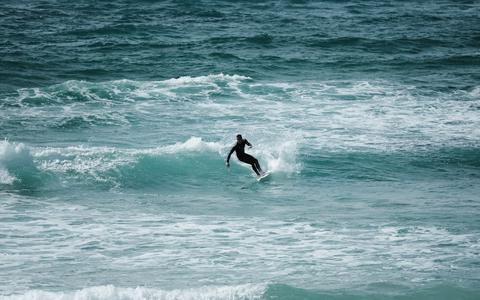
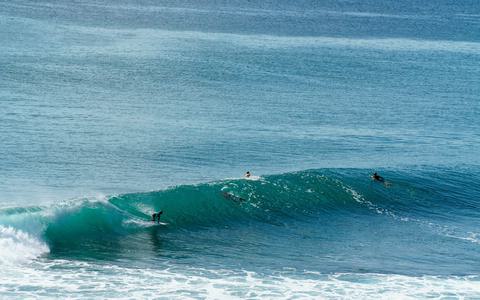
Best time to surf in the UK.

The best time to surf in the UK is February, October and December, when both breaks we score are in season. The waves run biggest December to March (typical faces 6 to 7 ft) and smallest April to September (3 to 4 ft).

The 2 United Kingdom breaks we score against years of hindcast, month by month: what makes each one work, when it is in season, the water, and how to get there. Each break's page has its live forecast and the trip from your airport.

This week

No day scores 6/10 or more this week. Best:

  1. Thurso EastMon Nov 235 ft4/10

Updated

Get a phone alert when a break in United Kingdom fires.

Get the iPhone app
QR code for BarrelFare on the App StoreOn an iPhone? Scan for the app.

Best time to surf in the UK, month by month

How many of the 2 breaks are in season each month, and the median typical wave, share of surfable days and water temperature across all of them.

MonthIn seasonTypical waveSurfable daysWaterWear
Jan 1 of 2 6 ft 72% 10 C / 49 F hooded 5/4
Feb 2 of 2 7 ft 73% 9 C / 48 F hooded 5/4
Mar 1 of 2 6 ft 83% 9 C / 48 F hooded 5/4
Apr 1 of 2 4 ft 69% 10 C / 49 F hooded 5/4
May 1 of 2 4 ft 66% 12 C / 53 F hooded 5/4
Jun 0 of 2 3 ft 59% 14 C / 56 F 4/3 + boots
Jul 0 of 2 3 ft 50% 15 C / 60 F 4/3
Aug 0 of 2 4 ft 68% 16 C / 60 F 4/3
Sep 0 of 2 4 ft 68% 15 C / 59 F 4/3 + boots
Oct 2 of 2 5 ft 75% 13 C / 56 F 4/3 + boots
Nov 1 of 2 5 ft 73% 12 C / 54 F 4/3 + boots
Dec 2 of 2 6 ft 69% 11 C / 52 F hooded 5/4

Each break in the UK, month by month

BreakJFMAMJJASOND
Fistral Beach
Thurso East

BestGoodShoulderOff

Fistral Beach

The UK's surf capital: consistent NW-facing banks at Newquay; Boardmasters venue.

The wave. Fistral is a straight sandy beach about 750 m long on the west side of Newquay, between Towan Head and Pentire Point East. Banks break left and right, and North Fistral usually runs a bit bigger than South Fistral. The beach is a venue for major international contests, and the British Surfing Association is based here.

When it works. West to west-southwest swell is the best match, and southeast wind blows offshore, with some shelter from southwest wind. It works on most tides, and the rights get hollow toward low tide. It works all year, and autumn and winter bring the best days.

Watch out for. Rips are strong all along the beach, and they get worse once the surf is overhead. The lineup is crowded whenever it works, so expect to share the peaks.

Who it suits. Small days can suit beginners, and the main peaks suit intermediates. Overhead days with strong rips are for experienced surfers.

Nearby. Little Fistral, next to the main beach, has lefts and rights that work best around low tide, with rips and rocks to watch. The Cribbar, a reef at the north end of the bay, breaks only when the swell is high and rarely works.

The wave
A punchy beach break.
Best months
Feb–Apr
Typical face
4–6 ft in season
Surfable days
68% in season
Water in season
10 C / 50 F, hooded 5/4
Sweet spot
4 ft faces
Tide
Best on a mid-low tide
Nearest airport
NQY
Getting there
11.2 km by road from NQY, about 20 min.

Flying in with a board. Airlines we have seen into NQY: Ryanair, Aer Lingus.

Forecast and the trip from your airport

Thurso East

Cold reef right; autumn/winter N/NW.

The wave. Thurso East is a fast right-hand reef at the mouth of the River Thurso, below the ruins of Thurso Castle. It breaks over a smooth, kelp-covered slab of Caithness flagstone, with barrel sections that shift with tide and swell direction. From 2006 to 2011 it hosted an international WQS contest.

When it works. Northwest swell is the best match, and west-northwest swell gives the hollowest waves. Southeast wind blows offshore. Mid tide is best, and too much water makes the wave fat and slow. Autumn and winter are the main season.

Watch out for. Rocks are the main hazard. The takeoff zone is small, and there is always a crowd when it breaks, so wait your turn. If you paddle out from the harbour, you cross the river rip. The water is cold and stained by peat.

Who it suits. Thurso East is for expert surfers on shortboards. Beginners go to Dunnet Beach instead.

Nearby. Dunnet Beach, on Dunnet Bay east of Thurso, is a beach break with a sand bottom and plenty of space. Brims Ness, about 10 minutes' drive west, has slab reefs below cliffs, and its Bowl needs a huge northwest groundswell.

The wave
A hollow reef break.
Best months
Nov–Dec
Typical face
6–8 ft in season
Surfable days
79% in season
Water in season
11 C / 51 F, hooded 5/4
Sweet spot
8 ft faces
Tide
Best on a mid tide
Nearest airport
INV
Getting there
186 km by road from INV, about 2 hr 29 min.

Flying in with a board. Airlines we have seen into INV: British Airways, KLM, easyJet, Aer Lingus.

Forecast and the trip from your airport

Surfing in the UK: quick answers

When is the best time to surf in the UK?

The best time to surf in the UK is February, October and December, when both breaks we score are in season. The waves run biggest December to March (typical faces 6 to 7 ft) and smallest April to September (3 to 4 ft).

When are the waves biggest in the UK?

The waves run biggest December to March (typical faces 6 to 7 ft) and smallest April to September (3 to 4 ft).

When is the off season for surf in the UK?

June to September: none of the 2 breaks we score is in season then.

What wetsuit do I need to surf in the UK?

It depends on the month. The water runs from 9 C / 48 F in February (hooded 5/4) to 16 C / 60 F in August (4/3), the median across the breaks.

Which airport do I fly into to surf in the UK?

It depends on the break: each one we score has a different nearest airport (INV, NQY). Each break's page has the ground leg from the airport.

Season figures come from years of hindcast, not a forecast (how we score a month). All countries: the full spots index. By month instead: where to surf, January through December.